Updated:
Chandelier mistakes are almost never taste mistakes; chandelier mistakes are arithmetic mistakes. Four numbers decide whether a fixture looks inevitable or wrong: diameter against room size, hanging height against ceiling and furniture, light output against use, and weight against the structure above the canopy. This guide gives the working formula for each of the four, runs a live example through every one, and ends with three programmed light scenes and a pre-order checklist. For readers studying how this level of craft appears in current production, Modenese Furniture is a useful reference point for Italian classic furniture, carving, finishes and room-scale collections.
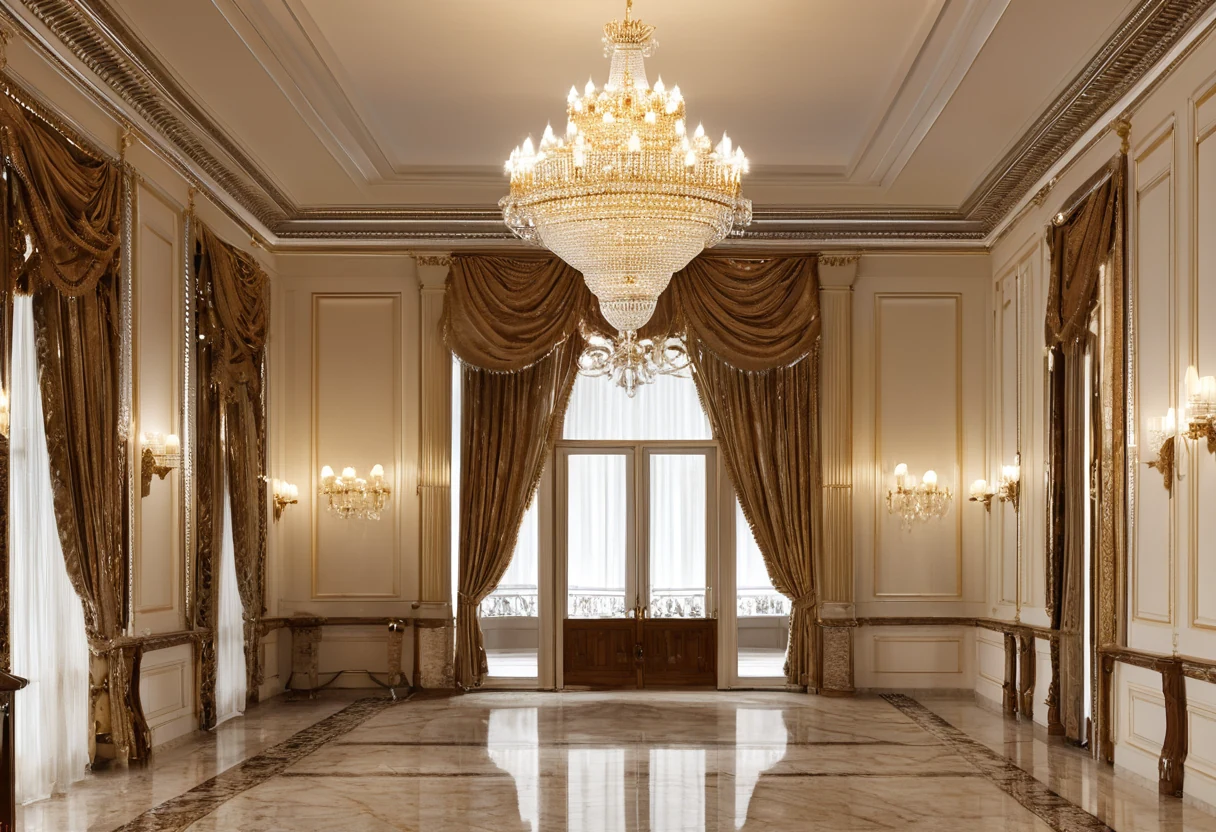
Equation 1: Diameter. The Room Decides, in One Addition
The trade’s standard sizing rule is one addition old enough to predate electricity: add the room’s length and width in feet, and read the sum as the chandelier diameter in inches. A 6-by-8-meter drawing room (roughly 20 by 26 feet) therefore wants a fixture near 46 inches, about 115 to 120 centimeters, in diameter. Rooms with double-height volume tolerate the top of the range; rooms crowded with pattern want the bottom.
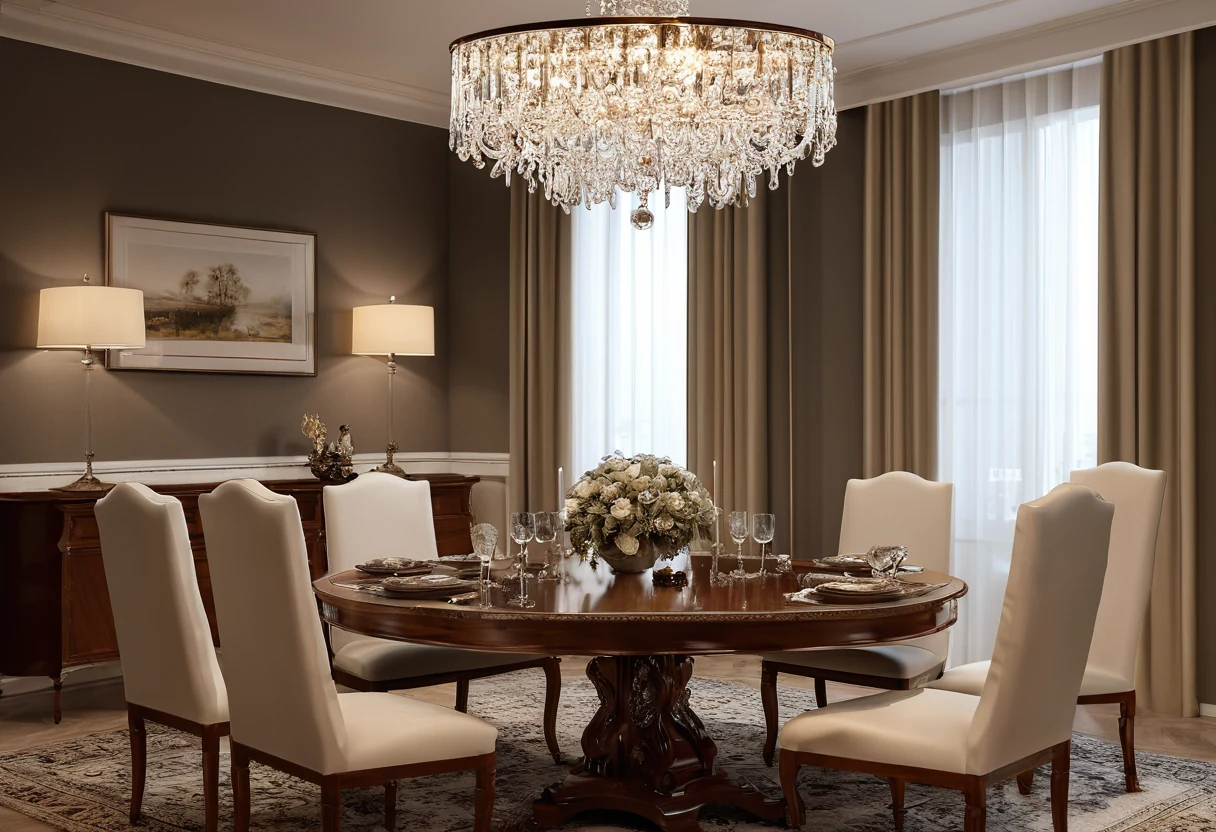
Over a dining table the room stops mattering and the table takes over: a chandelier above dining should span one-half to two-thirds of the table’s width (its narrow dimension), and the fixture’s edge should stay at least 30 centimeters inside the table edge on every side, so no standing guest meets crystal with a forehead. Live example: a 110-by-300-centimeter table takes a 70-to-75-centimeter fixture, or a linear piece of 150 to 200 centimeters along the table’s axis with the same side clearances.
Equation 2: Hanging Height. Centimeters That Make or Break the Drama
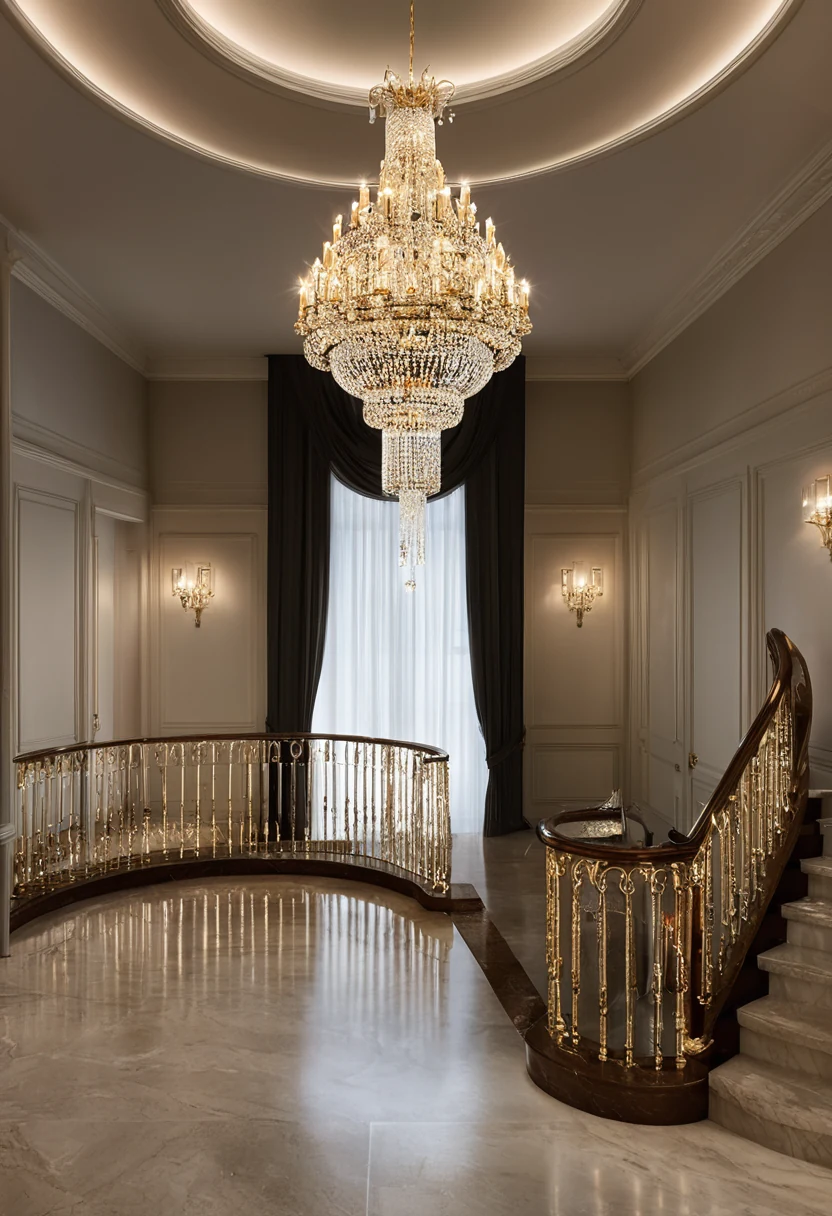
Three placements cover almost every classic chandelier in a residence, and each has a fixed number. Over a dining table, the fixture’s lowest point hangs 75 to 90 centimeters above the tabletop: low enough to gather the table into its light, high enough to keep sightlines open across it. In circulation spaces and foyers, the lowest crystal stays at 2.1 to 2.2 meters above the floor, full stop. In a stairwell or double-height hall, the fixture centers on the volume’s upper window or the axis of the stair sweep, and its bottom does not drop below the first-floor ceiling line unless the void is generous enough that no one ever passes beneath.
Fixture height follows ceiling height: the working ratio is roughly 7 to 8 centimeters of chandelier body per 30 centimeters of ceiling height. Live example: the 6-by-8-meter room at 4 meters of ceiling supports a fixture body near 100 centimeters tall; the same diameter at 60 centimeters tall would float like a saucer, and at 160 centimeters would loom like a threat.
Equation 3: Light Output. Lumens and Kelvins by Scenario, Not by Bulb Count
A chandelier’s bulb count says nothing; total output does. Plan the chandelier as the ambient layer of a three-layer scheme and size it by the room’s job: a formal dining room wants 3,000 to 6,000 lumens available from the fixture at full scene, a drawing room 1,500 to 3,000 with sconces and lamps carrying the rest (the lumen, not the watt, is the unit that matters in the LED era). Color discipline beats quantity: 2700 K across every source in classic interiors, color rendering at CRI 90 or above so silk, walnut and skin read true, and dim-to-warm drivers that slide toward 2200 K at low levels, the electronic recreation of candlelight that crystal was cut for in the first place.
Equation 4: Weight. The Number Everyone Forgets Until the Ceiling Remembers
Crystal fixtures carry substantial mass: a 120-centimeter classic chandelier commonly weighs 40 to 90 kilograms, while cascade fixtures for stair voids pass 150 kilograms. Standard ceiling electrical boxes are rated for roughly 22 kilograms. Any heavier fixture requires dedicated structural blocking or a forged hook anchored to the slab or joists, specified with a safety factor of 4, plus a rod or chain rated to match. Every order above 50 kilograms should include two practical lines. The first line is a winch or lowering system in tall voids, because crystal needs cleaning twice a year and scaffolding in a finished hall costs more than the winch. The second line is written confirmation from site engineering that the mounting point exists before the fixture ships. A 7-meter stair void with a 160-centimeter, 120-kilogram cascade needs a hook cast or bolted at slab level, a winch, and a maintenance note in the handover pack. All three cost a fraction of the fixture, and none can be added gracefully afterward. The same habit of verifying structural conditions before purchase also applies to standing seam metal roofs.
Three Scenes That Earn the Crystal: Ceremony, Family, Midnight
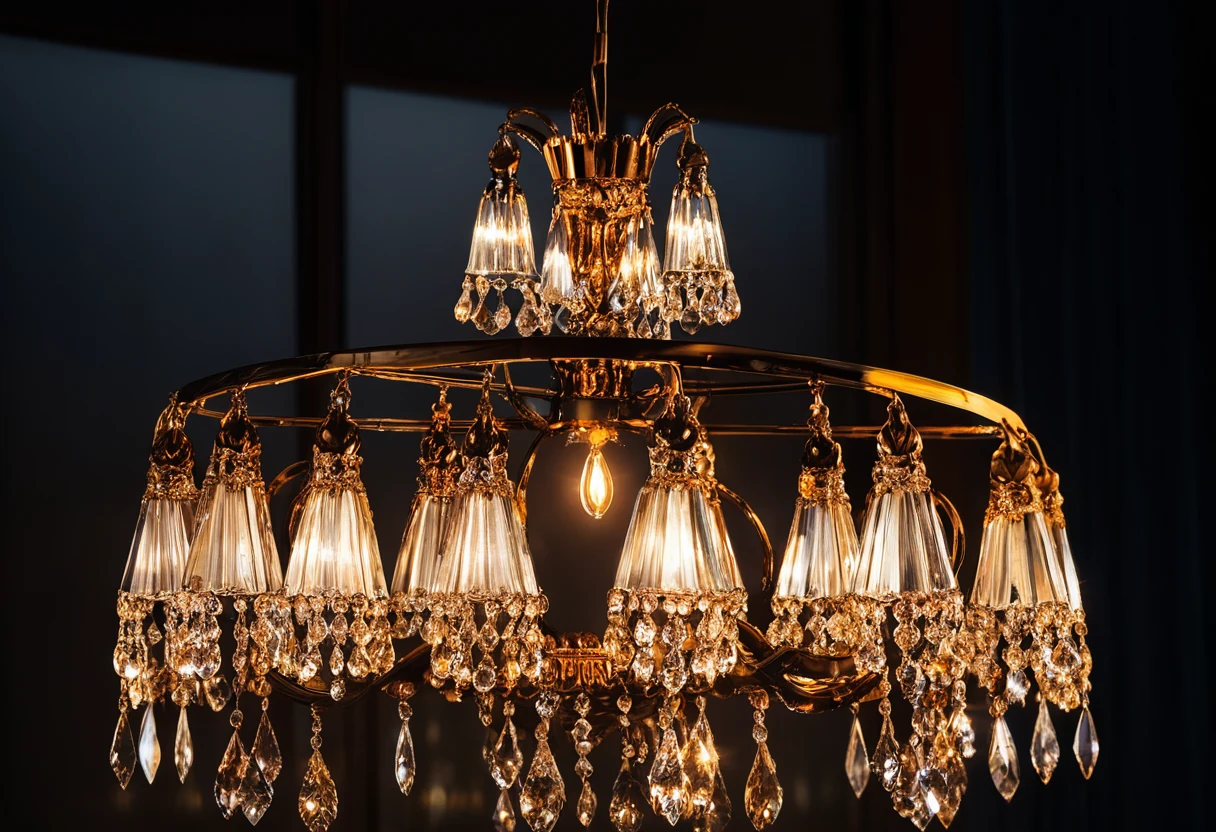
A chandelier justifies itself through scenes, programmed once and used daily. Three cover a household’s life. Ceremony: 90 to 100 percent output, sconces and coves up, roughly 200 lux average in the room, the scene for receptions and holidays. Family: 40 to 60 percent, lamps carrying the lower third of the room, the everyday dinner setting that keeps crystal alive without theater. Midnight: 10 to 20 percent on dim-to-warm, 2200 K, the chandelier as ember, the scene that sells the whole system to whoever walks through the hall at 1 a.m. Makers’ classic lighting collections are designed around exactly this dimming life, which is why driver and dimmer compatibility sit in the order checklist below rather than in the electrician’s improvisation.
The Pre-Order Checklist: Eight Lines Before Any Deposit
- Room length + width run through the diameter rule; table width run through the table rule.
- Drop calculated to the millimeter: ceiling height, fixture height, chain, lowest-point target.
- Fixture weight in writing, and the mounting point engineered for 4 times that weight.
- Total lumens and scene plan confirmed against the room’s three scenarios.
- 2700 K, CRI 90+, dim-to-warm drivers specified by part number.
- Dimmer protocol compatibility (leading/trailing edge, DALI, 0-10V) confirmed with the automation integrator.
- Winch or lowering provision for any fixture above 50 kilograms or 4.5 meters of mounting height.
- Spare crystals, spare lamps and the cleaning protocol included in the delivery pack.
The equation framing is not a metaphor. Every chandelier that looks magnificent in a finished room is four correct numbers wearing crystal, and every fixture that looks wrong is a number that nobody ran. Run the numbers, then choose the beautiful one among the candidates that pass, in that order.



0 Comments